
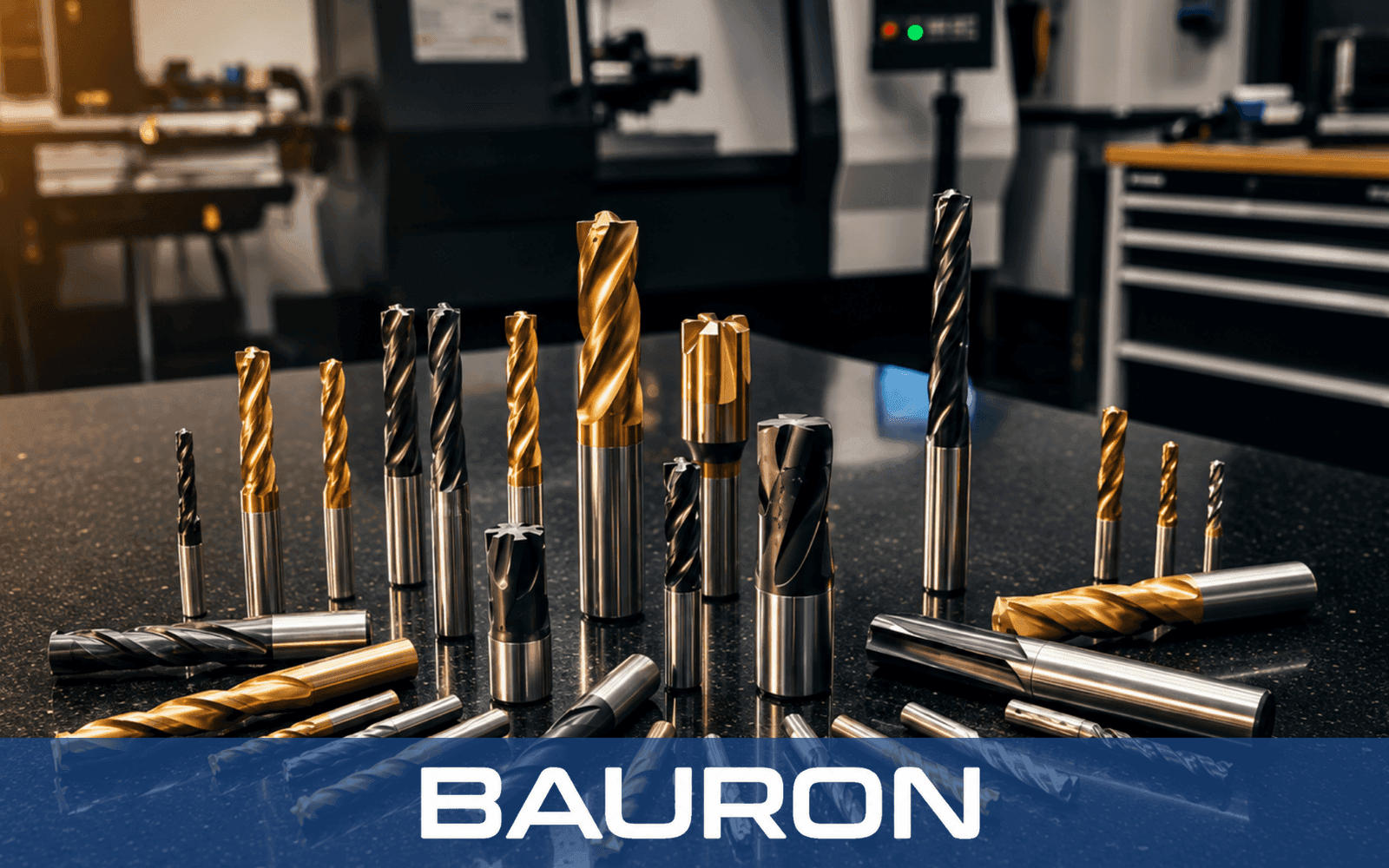
Bauron supports manufacturers that need dependable cutting performance, practical engineering input, and tools that fit the work in front of them. As a precision tool manufacturer focused on CNC tools, custom tooling, and custom manufacturing solutions, Bauron helps teams move beyond off-the-shelf options and choose tools around the material, machine, tolerance, process, and production goal.
What does Bauron make?
Bauron manufactures precision end mills, drills, reamers, taps, and live tool holders, and designs custom CNC tools for specific machining applications. Customers can browse the tool catalog or ask an engineer for application support. Bauron tools serve industries including aerospace, medical, and automotive manufacturing.
What makes application-built tooling different?
Application-built tooling starts with the part, not the catalog. Instead of forcing a standard tool to fit the process, the tooling choice is shaped by the material, the feature geometry, the machine setup, the required finish, and the production setting. That approach can reduce avoidable compromises, especially on hard materials, tight dimensions, repeat jobs, or unusual part features.
Precision CNC tools begin with the real machining challenge
Every shop knows that a tool is only as good as the process around it. A cutter that works in one setup may struggle in another because of toolpath strategy, workholding, coolant delivery, machine rigidity, material condition, or depth-of-cut needs. Good tooling conversations should start with the real problem on the floor.
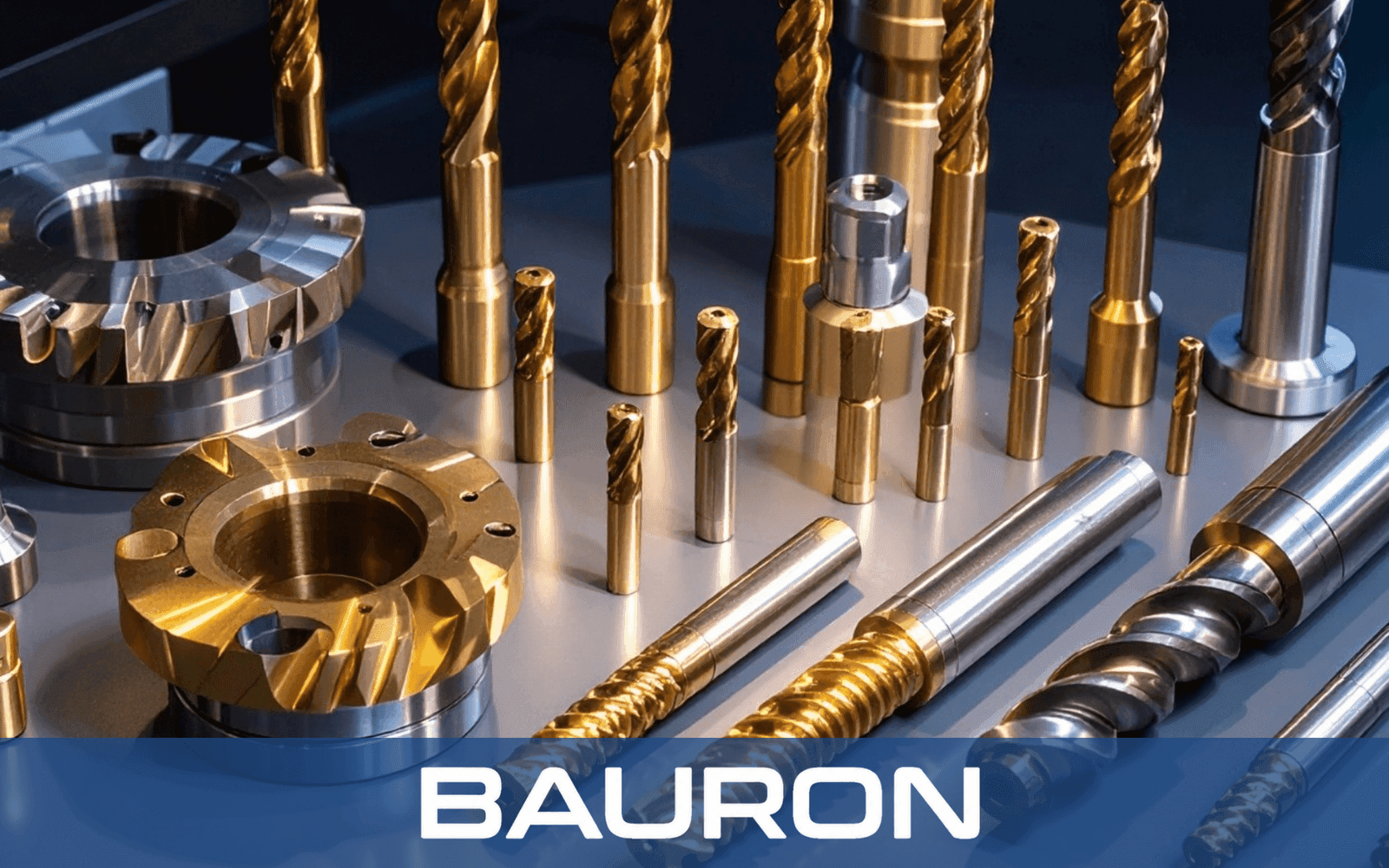
Bauron's role is best seen through that lens. Precision is not just about making a sharp, accurate tool. It is about helping the tool support repeatable machining results in real production conditions. For some teams, that means better edge life in a demanding material. For others, it means fewer steps or a more stable finish on a critical feature.
When the tool is selected or designed around the job, manufacturers can make better choices about cycle flow, changeovers, tool life, and quality control. The result is a more planned process instead of a trial-and-error search for something that works well enough.
Where custom tooling can create practical advantages
Custom tooling is often considered when standard CNC tools do not fully match the part requirement. In many cases, standard tooling is the right answer. But when part geometry, tolerance, material, or production volume creates friction, a custom option may offer a more direct path.
Custom tooling may be worth exploring for:
- Complex part features: A form, angle, radius, groove, or profile that normally requires the use of several tools to produce.
- Repeat production: Operations that occur often enough for process gains to be significant.
- Difficult materials: Jobs where you need special geometry or coating for heat, wear or chip control.
- Pass reduction: Applications where one custom tool can reduce tool changes or passes.
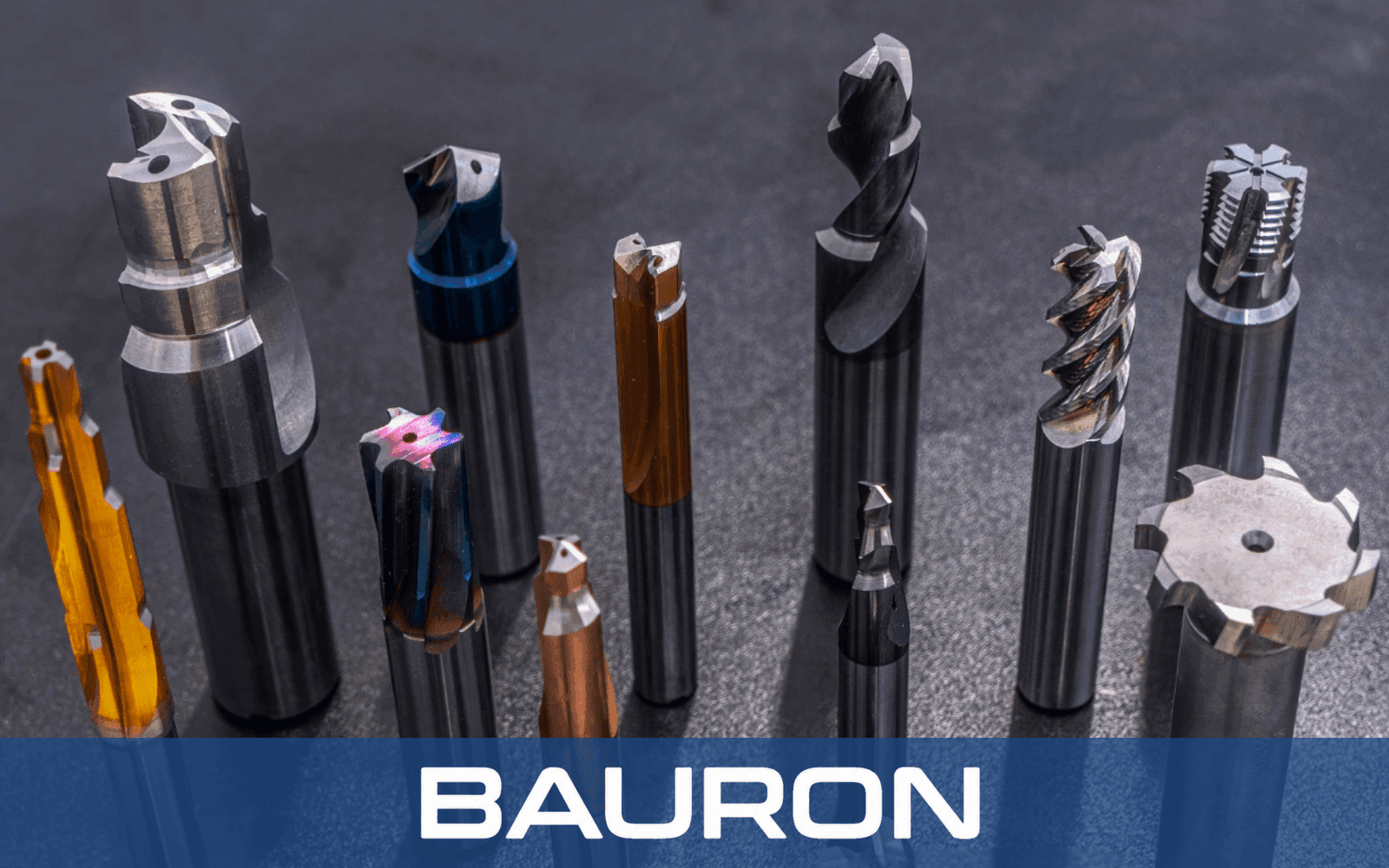
A smarter path from tooling question to production answer
Choosing CNC tools should not feel like guesswork. Bauron's approach is simple: understand the need, weigh the limits, and identify the tool that supports the result.
A useful conversation may include details such as:
- Material and conditionWhat is being machined, and are there hardness, heat-treatment, or chip-control concerns?
- Machine and holder setupWhat spindle, toolholder, coolant, and rigidity conditions affect performance?
- Part feature and toleranceWhat is the geometry being cut and how accurate or repeatable must the operation be?
- Current pain pointIs the problem tool life, finish, chatter, burrs, size drift, or cycle time?
- Production contextIs this a prototype, short run, recurring job or high-volume process?
These details help turn a general tooling request into a more useful recommendation. They also help avoid overbuilding a solution when a simpler tool will do the job.
How does a precision tool manufacturer support better decisions?
A precision tool manufacturer supports better decisions by linking tool design, manufacturing skill, and application knowledge. That mix matters because tooling is rarely an isolated purchase. It affects setup strategy, machine time, inspection results, operator confidence, and the consistency of the finished part.
For manufacturers, the right partner should be able to discuss both the tool and the application. That means understanding not only size and material, but also why a tool is failing, why a finish is uneven, or why a cycle is taking longer than planned. Even when the answer is a standard tool, the choice should be based on the application.
Bauron's focus on precision CNC tools and custom tooling gives shops a resource for those conversations. Instead of treating tooling as a line item, manufacturers can treat it as part of the larger process plan.
Standard tools and custom solutions both have a place
A strong tooling strategy does not automatically favor custom over standard. Standard CNC tools are efficient, available, and proven for many common operations. Custom tools become useful when the application has a clear need that a standard option cannot handle well.
| Tooling need | Practical direction |
|---|---|
| Common drilling, milling, or finishing operation | Start with proven standard CNC tools |
| Unusual geometry or profile | Review custom tooling options |
| Recurring quality or wear issue | Check tool design, coating, setup, and process conditions |
| Multiple tools used for one repeat feature | Consider whether a custom tool could simplify the operation |
| Prototype or uncertain design | Use flexible tooling before moving to a special solution |
This practical balance helps protect resources while still leaving room for improvement where the process justifies it.

Takeaway for manufacturers
Bauron offers a practical path for manufacturers looking for precision CNC tools and custom tooling shaped by real machining needs. The right tooling choice starts with the application and works back into design, selection, and process fit.
